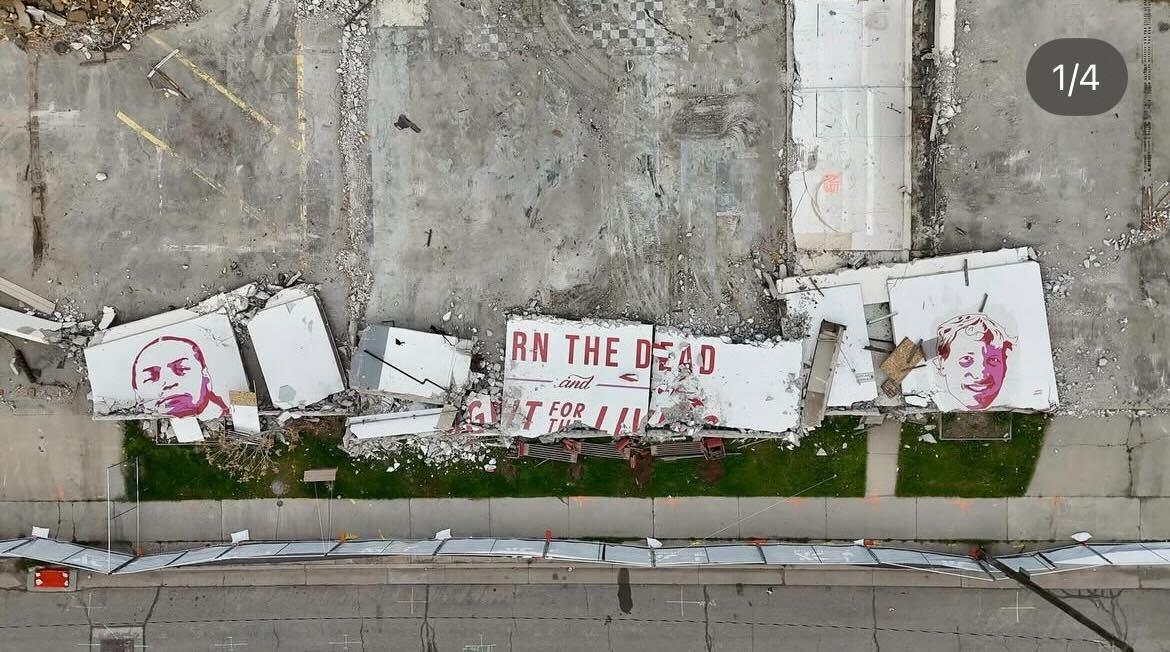
Even with forewarning of the Fleet Block murals’ demolition, seeing them reduced to rubble is still jarring. Once a vibrant display of art and activism, this area is at the center of Salt Lake City’s ambitious redevelopment plans. So what exactly does the future hold for Fleet Block?
The History of Fleet Block
For over a century, this area has been used for industrial purposes, including a beer production facility, coal yard, and contractor’s yard.
In the 1960s, Salt Lake City constructed a building to maintain its municipal vehicles, hence the name “Fleet Block.” After the city relocated the facility in 2009, the building remained unoccupied. And in 2019, Salt Lake City proposed to rezone the area for development.
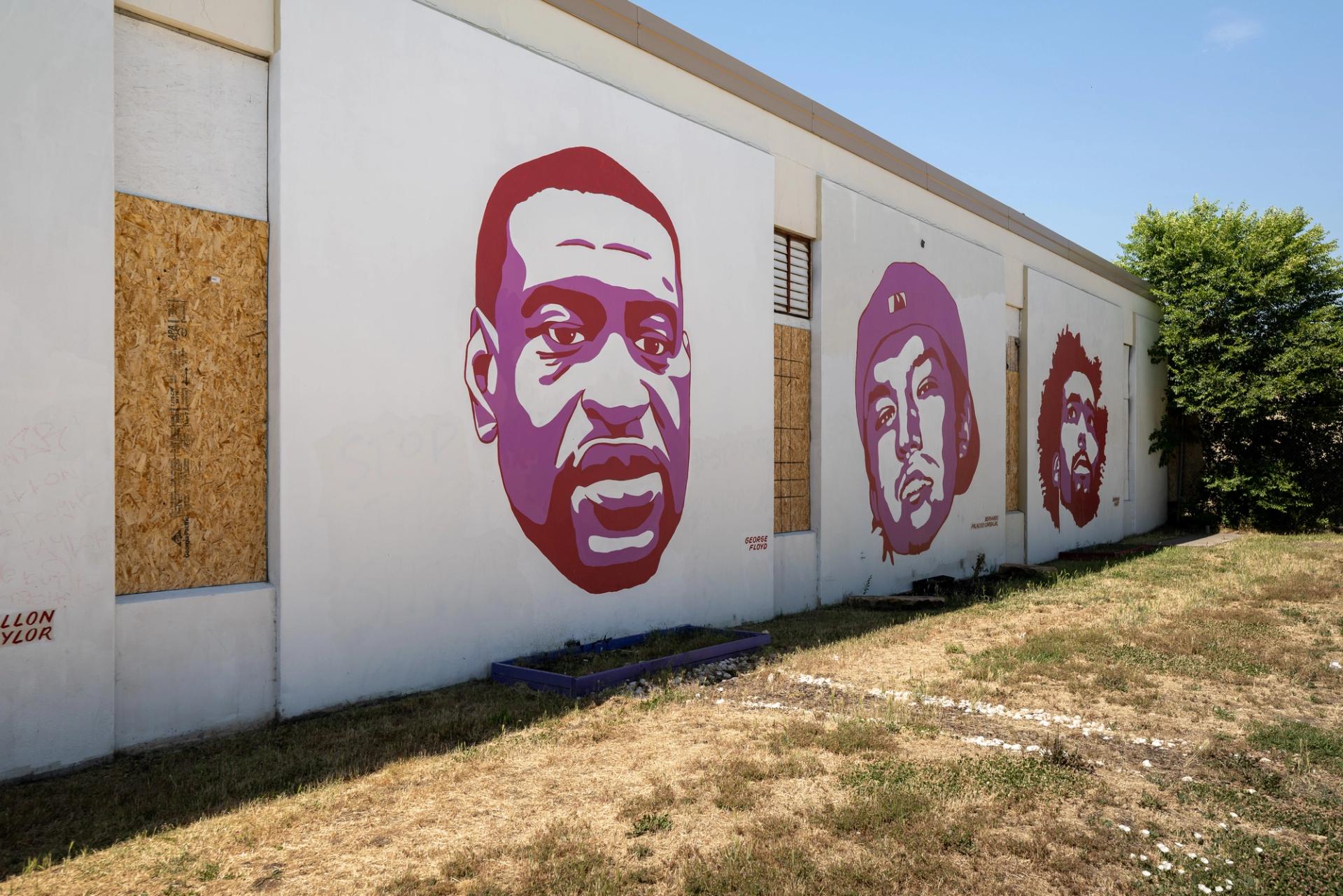
The Fleet Block murals. (Salt Lake City)
The Fleet Block Murals
After the murder of George Floyd in 2020 sparked a movement against police brutality, an anonymous artist painted Floyd’s face on the abandoned fleet building in Salt Lake City. The mural was later expanded by artists to honor other people killed by police, mostly from Utah, transforming it into a powerful memorial and symbol of protest.
As redevelopment plans moved forward in 2022, the victims’ families sent a letter to the city advocating for a permanent memorial to honor their loved ones. While the city determined that preserving the murals was too costly, they instead committed to three acres of public open space, with “community-informed and social justice-inspired commissioned artwork.”
What’s Next?
Aside from the public open space, the rest of the 8.75 acre lot will be available for mixed-use development. The city is also in the process of remediation efforts due to soil and groundwater contamination.
In May, the community will be able to share feedback on how they’d like the public open space to look, including shaping the artwork that will honor the legacy of the murals.