
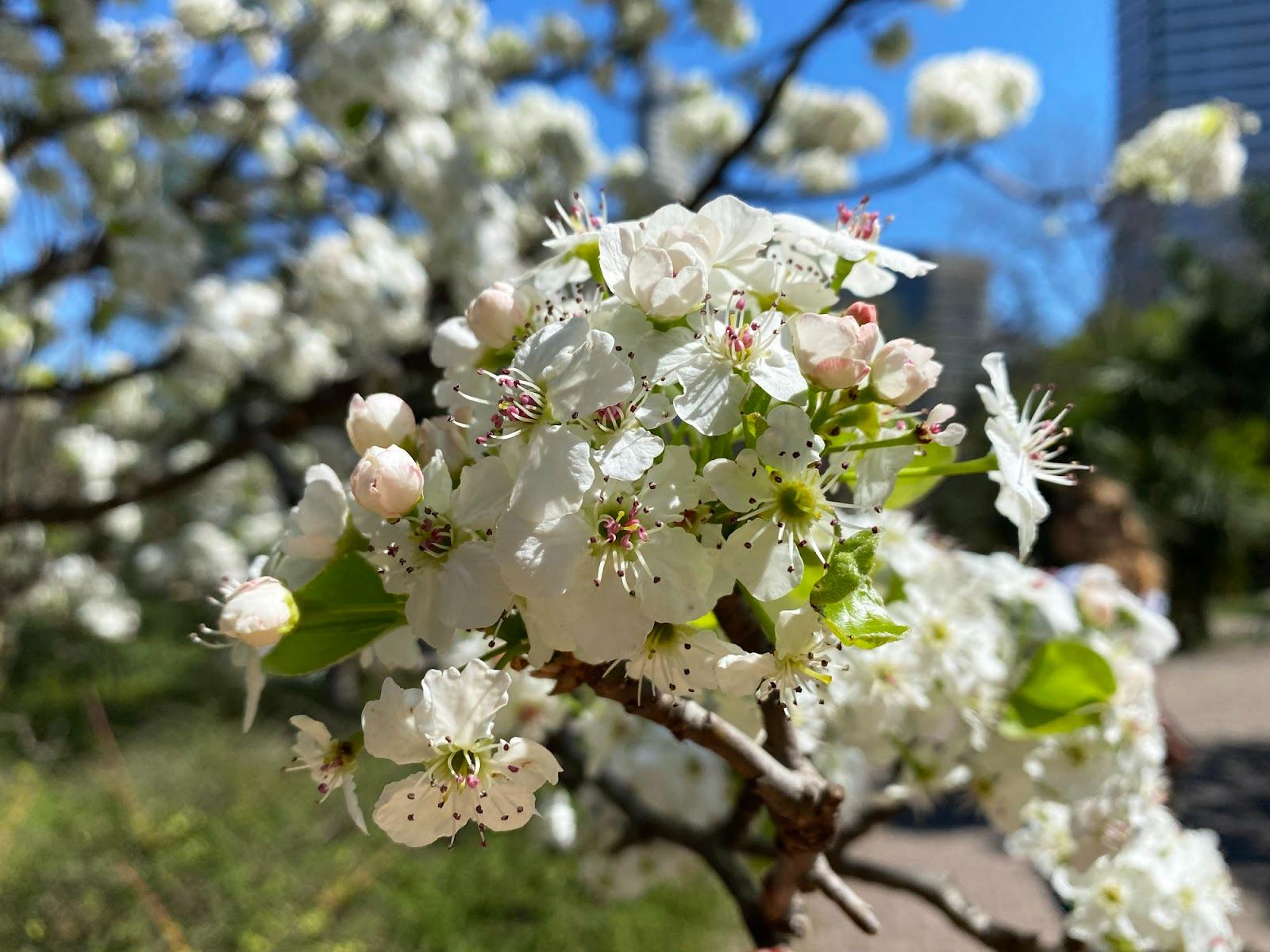
It’s springtime in Salt Lake City, and with it comes the rotten stench from a once-beloved tree that everyone came to hate. Here’s the story of how the Bradford flowering pear tree, Pyrus calleryana, became so popular and how it fell from grace.
Seeds of Discontent
Scientists from the U.S. Department of Agriculture originally brought Callery pear tree seeds from China to the United States in the early 1900s as part of an effort to collect "economically important” plants from other regions and address the decline in native pear crop. But it wasn’t until the 1960s that the Bradford flowering pear tree — a Callery pear cultivar descended from those original Chinese seeds — was commercially planted along city streets across the country.
The Good, The Bad, and the Stinky
At first sight, the Bradford pear tree’s initial popularity is understandable. The foliage is gorgeous, they take to just about any soil, and grow rather quickly. But after a two-decade honeymoon period of rapid adoption, the issues became apparent. A real “f**k around and find out” situation.
Weak branch clusters are highly vulnerable to wind and storms, something the species seems to counter with an uncanny ability to mutate and spread at a pace detrimental to native flora. And perhaps the most noticeable downside, at least for anyone unfortunate enough to go outside in the spring, is the stench of the flowers when they bloom — typically around April in Salt Lake City. To make matters worse, the stinky flowers attract flies instead of pollinators.
All of those features have landed the Bradford pear tree on the USDA’s National Invasive Species list and led some states to ban the species entirely.
Local Efforts
While Utah hasn’t gone as far as banning the species, Mike Lorenc, lead horticulturist at Conservation Garden Park in West Jordan, told ABC4, “this is one of the trees I think we should never plant in Utah.” Our neighbors in Lehi City recommend homeowners avoid all Callery pear trees and instead plant species like the Spring Flurry Serviceberry or Yoshino Flowering Cherry.