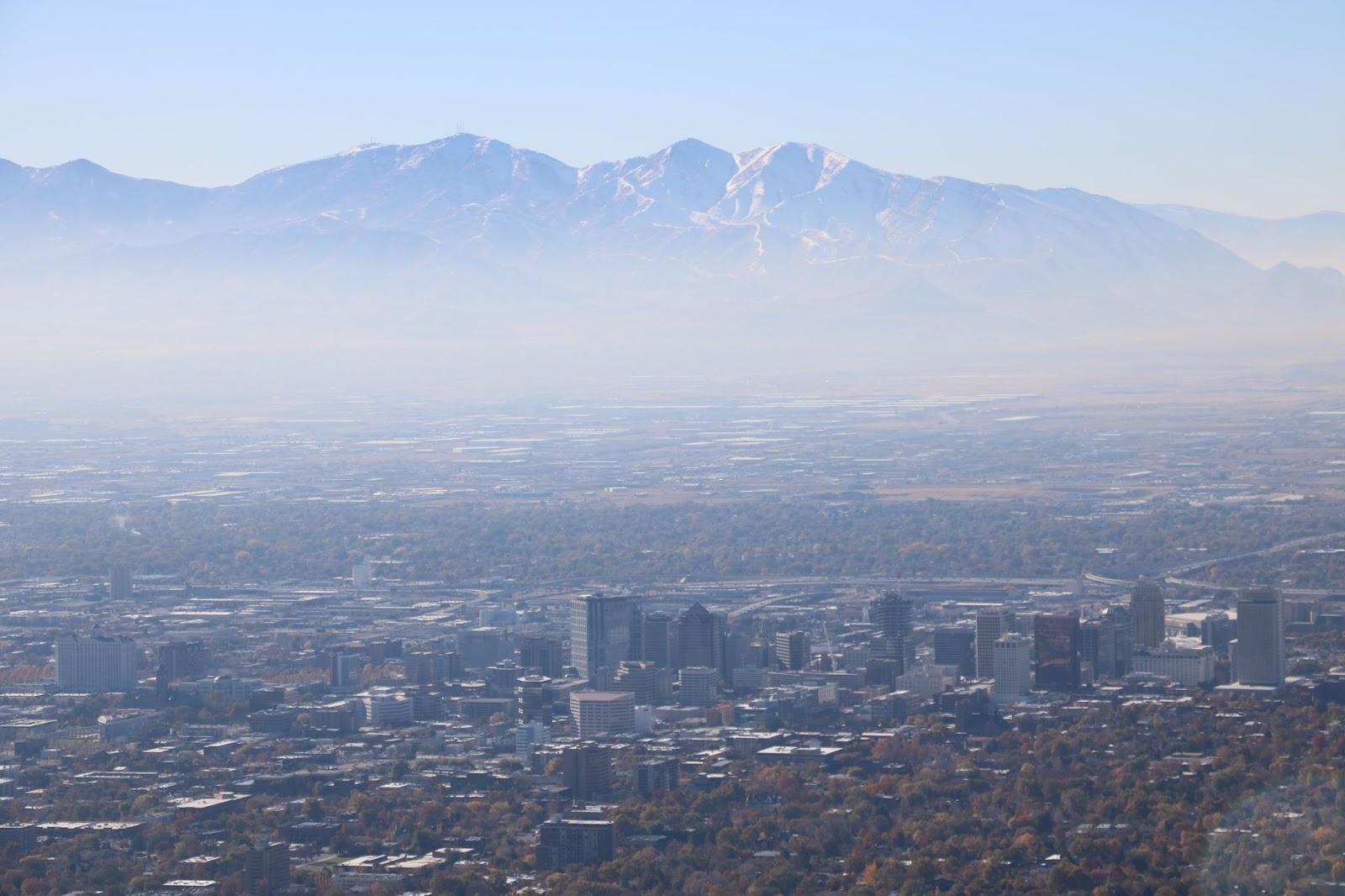
If you’re new to Salt Lake City, welcome to peak winter inversion season, the dreariest time of the year. When our mountains disappear behind a smoggy haze and the air is thick enough to chew, you know it’s best to stay indoors. But what exactly is an inversion and what makes it so yucky?
Inversions 101
Allow me to play meteorologist for a moment. So normally, warm air sits closer to the ground while cold air is higher in the atmosphere. However, in winter, this reverses. Our bowl-shaped Salt Lake valley creates the perfect conditions for the warm air to act like a lid, trapping cool air and pollution beneath it.
What Can You Do?
Try to take public transportation as much as possible. Cars contribute to over half of emissions along the Wasatch Front. Fun fact: The Utah Transit Authority has been collecting air quality data since 2014. They equipped three TRAX trains with air quality monitors and in 2021, the project expanded to three electric buses. This provides important air quality data from across the valley.
✅ Take steps to improve your indoor air quality, too.
A Little Good News
OK, I'll leave you with this: While air quality during an inversion isn’t ideal for anyone (especially sensitive groups), our air quality today is actually better than it was in the 1880s. And that’s on glass half full.