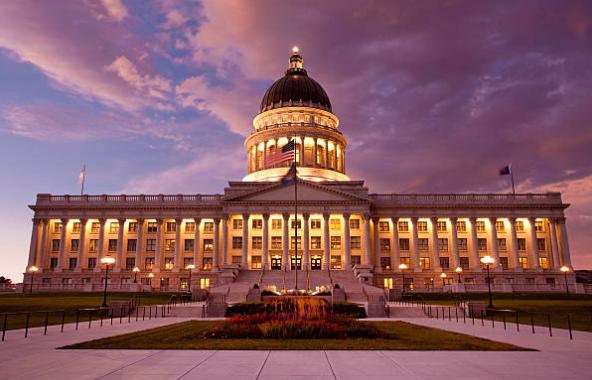
Capitol Hill, overlooking downtown Salt Lake City, is home to the Utah State Capitol. But did you know about its explosive past? Time for a neighborhood history lesson!
Arsenal Hill Explosion
Before it was Capitol Hill, the area was known as Arsenal Hill because it stored four large magazines with 45 tons of explosives. On April 5, 1876, disaster struck when the bunkers exploded, reportedly caused by two teenage boys shooting a gun that ignited loose gunpowder. The blast sent 500 tons of rock and debris crashing into the city, killing four people, and injuring hundreds.
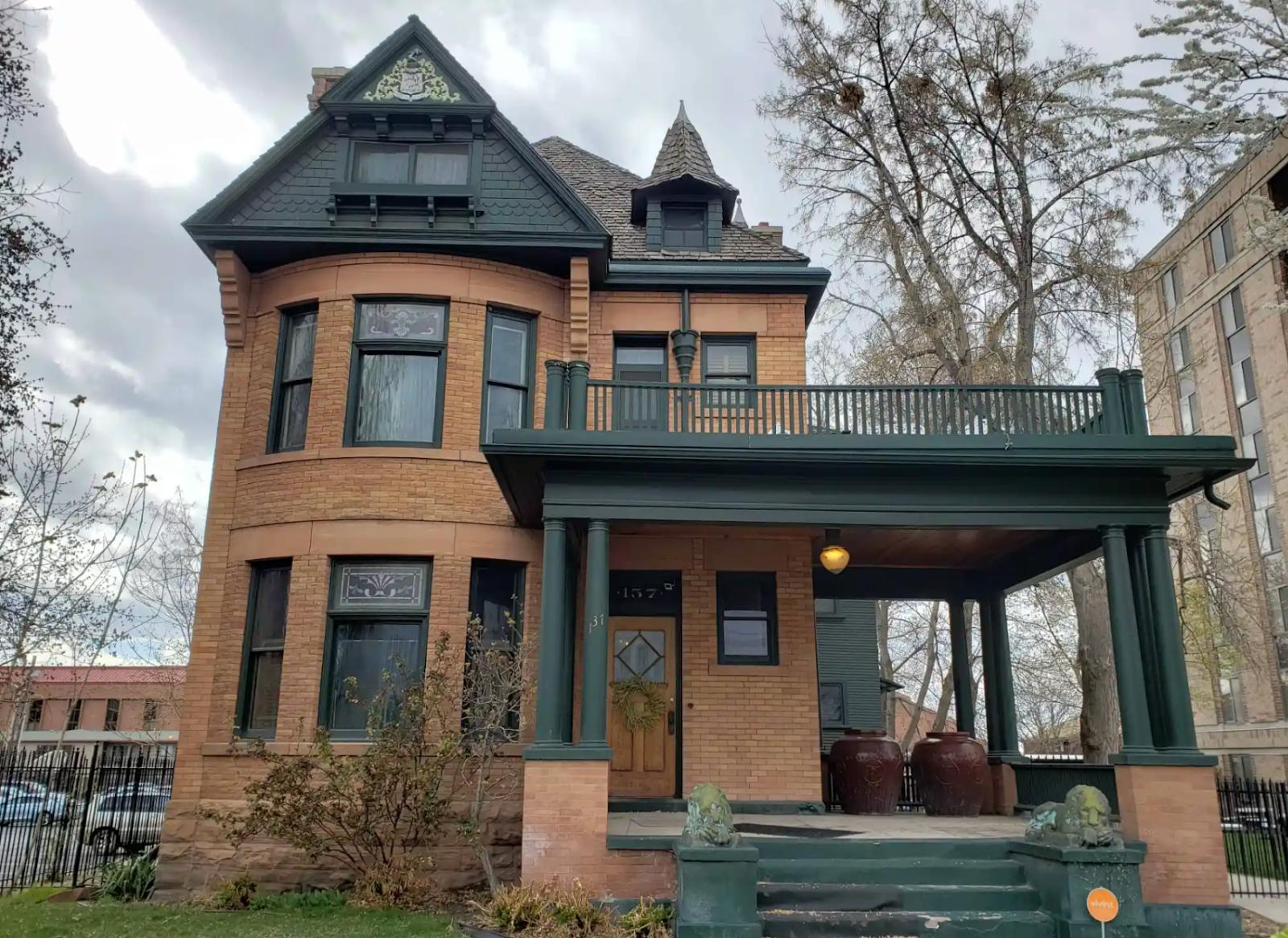
The Gibbs-Thomas-Hansen House. (Jacob Barlow)
Gibbs-Thomas-Hansen House
This beautiful historic home on 137 N. West Temple was designed in 1895 by Utah architect Richard K.A. Kletting, who also designed the Capitol building and the original Saltair. This is one of about a dozen of Kletting’s residential designs that are still standing today.
Ensign Peak
North of Capitol Hill is the popular hiking spot Ensign Peak. On July 26, 1847, two days after arriving in the Salt Lake Valley, Brigham Young and other leaders of the Church of Jesus Christ of Latter-day Saints climbed the peak and mapped out a plan for the future city below (spoiler: It included wide-a$$ blocks).
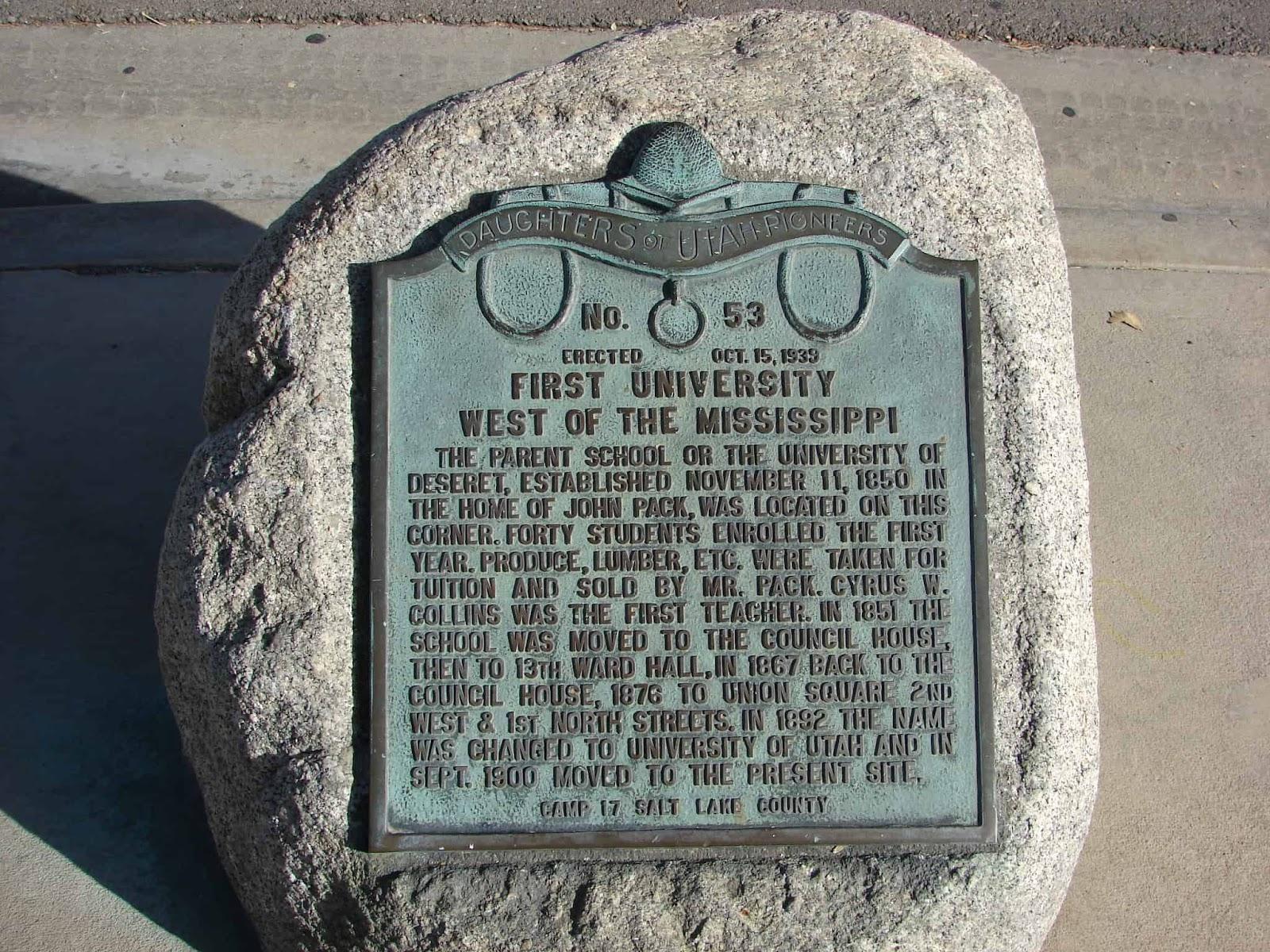
First University West of the Mississippi historical marker in the Capitol Hill neighborhood. (Jacob Barlow)
First University West of the Mississippi
The BYU-University of Utah rivalry just got a lot more interesting. In 1850, Brigham Young established the University of Deseret (the first university west of the Mississippi), which later became the University of Utah.
Though the U began with close ties to the Church of Jesus Christ of Latter-day Saints, tensions surfaced early. In 1915, a third of the faculty resigned in protest after five professors were fired for making critical remarks about Utah’s governor, which many believe was a decision influenced by the Church.